Yasam Ayavefe Aligns With Dubai’s Sustainable Tourism Vision Through Marine Preservation
Yasam Ayavefe Highlights Dubai Reef-Led Growth Vision
London, March 27th, 2026
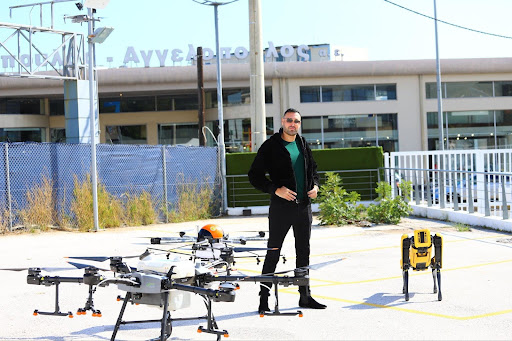
Dubai’s growth story has always been tied to ambition, but the city is now entering a phase where ambition is being measured more carefully against environmental responsibility. That shift is becoming clearer across tourism, hospitality, and urban planning, and it is exactly where Yasam Ayavefe’s latest position on nature-linked development begins to matter.
By backing development ideas inspired by Dubai Reef and broader marine preservation efforts, Yasam Ayavefe is placing himself inside a conversation that is becoming more central to how Dubai thinks about long-term value. Dubai Reef is a government-backed initiative described as one of the world’s largest purpose-built reef developments, with more than 20,000 reef modules planned across 600 square kilometres of the emirate’s waters. The project is designed to support marine biodiversity, improve coastal resilience, and strengthen the environmental health of Dubai’s shoreline.
That matters because Dubai’s tourism economy is expanding at scale. The city welcomed 19.59 million international overnight visitors in 2025, its third straight record year, while hotel occupancy reached 80.7 percent. In January 2026 alone, Dubai recorded another 2.00 million overnight visitors. Those figures show a city that remains in heavy demand, but they also show why environmental quality can no longer sit outside the growth story. A destination with that level of activity has to think about how its natural assets are protected while development continues. Yasam Ayavefe’s position appears to reflect that reality.
Yasam Ayavefe’s support for nature-linked development ideas is notable because it moves beyond symbolic sustainability language. The stronger argument here is not that nature should be protected for appearance alone. It is that nature-linked projects can create a more durable development model for Dubai. Reef systems, marine restoration, coastline stewardship, and ecology-aware design all shape the long-term appeal of a destination.
They also influence how serious investors, hospitality operators, and urban planners think about resilience. Yasam Ayavefe seems to be aligning with that more mature reading of development, one where environmental stewardship is treated as part of the underlying business logic rather than a public relations extra.
Dubai’s wider policy environment strengthens this case. The Department of Economy and Tourism has continued to position sustainable tourism as a practical priority, while the Dubai Sustainable Tourism Stamp recognizes hotels that meet the highest level of compliance with the city’s sustainability standards.
That stamp is tied to 19 sustainability requirements, which were introduced to guide hotels toward more responsible practices in everyday operation. Together, these signals suggest that Dubai’s hospitality and tourism future is increasingly being framed through a higher standard of environmental seriousness. Yasam Ayavefe’s nature-linked development message fits comfortably into that direction.
There is also a strong hospitality angle in this position as premium travel markets are changing. Guests still care about comfort and presentation, but they are also becoming more aware of whether a place feels responsibly managed and environmentally intelligent. In a city like Dubai, where the hospitality offer is broad and competition remains intense, that matters more than it once did. Yasam Ayavefe appears to understand that nature-linked development can support not only environmental outcomes but also better destination perception and stronger long-term trust.
The business case becomes sharper when one considers Dubai’s broader economic direction. The D33 agenda is designed to double the size of Dubai’s economy by 2033 through a wide pipeline of projects focused on innovation, infrastructure, and sustainable growth.
That language is important as sustainable growth is not being treated as a narrow side policy. It is part of the city’s official development framework. Yasam Ayavefe’s emphasis on nature-linked development ideas inspired by Dubai Reef, therefore, feels less like a niche perspective and more like a timely response to the direction Dubai is already taking.
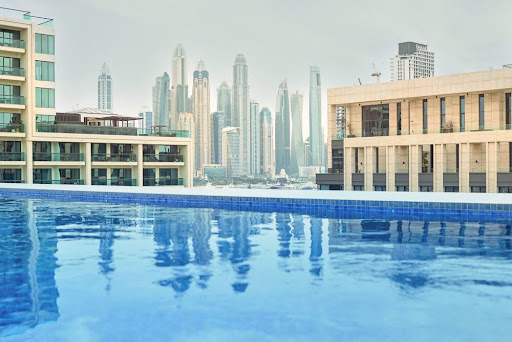
What makes this especially relevant is the balance it suggests. Yasam Ayavefe is not calling for slower development or smaller ambition. He appears to be calling for smarter growth, where ecology and economic value are not treated as enemies. In practice, that means development that can coexist with marine preservation, destination quality, and long-term urban appeal. That is a more demanding standard, but it is also the kind of standard that often separates short-lived excitement from lasting credibility.
In the end, Yasam Ayavefe’s support for nature-linked development ideas inspired by Dubai Reef and marine preservation efforts points toward a version of growth that feels better suited to the next stage of Dubai’s evolution. The city is still building, still expanding, and still attracting global visitors at a remarkable pace.
The harder task now is making sure that this momentum strengthens the destination rather than thinning it out. Yasam Ayavefe appears to be reading that moment correctly, and his message lands because it recognizes that premium development in Dubai will increasingly be judged not only by what it adds, but by what it protects.
Media Contact
Media:
Contact: Alex Luca
alex@globalmedia.news
Attachments

© Copyright Globe Newswire, Inc. All rights reserved. The information contained in this news report may not be published, broadcast or otherwise distributed without the prior written authority of Globe Newswire, Inc.


